
A student who successfully completes this programme:
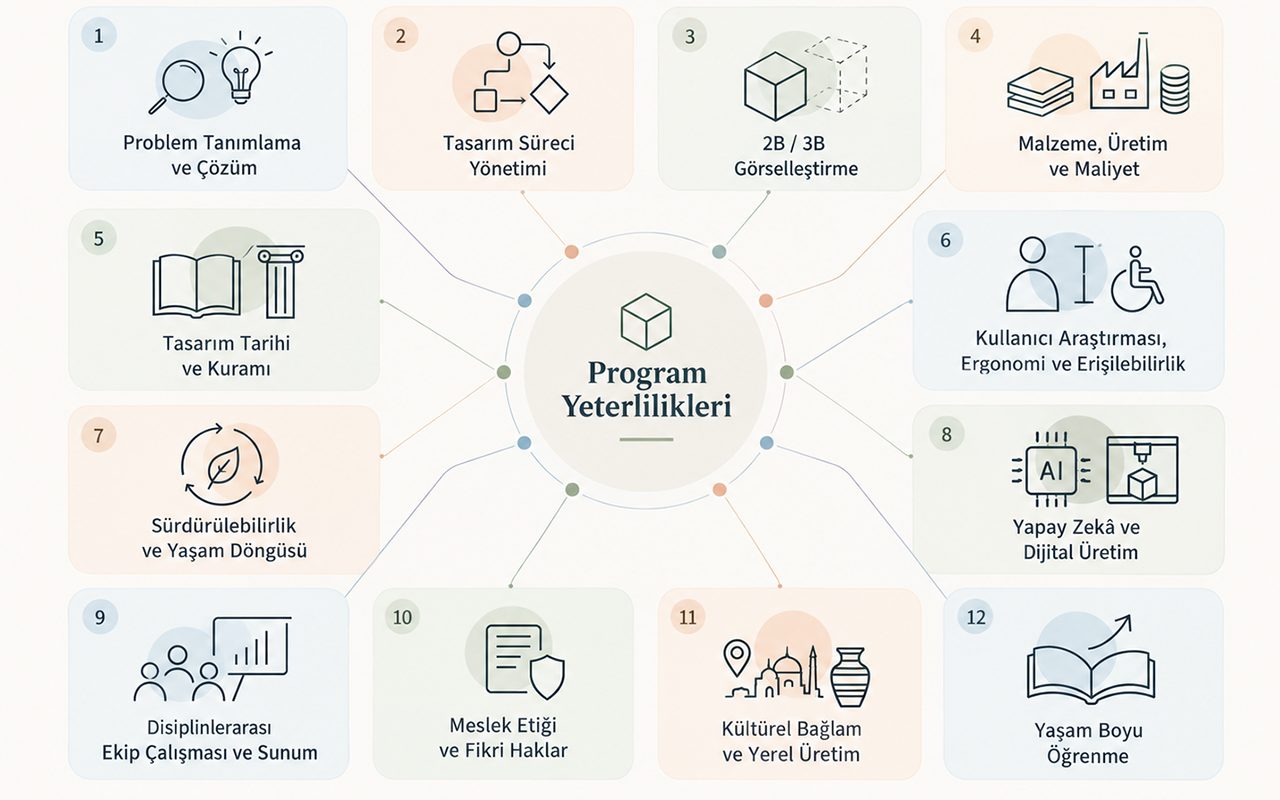
- Defines problems creatively, develops solution-oriented ideas, thinks critically, and synthesises acquired knowledge to propose solutions.
- Plans, manages and carries out the design process.
- Plans and conducts design-oriented research and transfers the results into the design process.
- Thinks with the elements and principles of basic design and visual composition, and can apply ideas in two and three dimensions.
- Identifies users’ needs, anticipates their expectations and integrates them into the design process.
- Is able to work both individually and as part of a team.
- Understands the relationship of Industrial Design with other disciplines and can carry out interdisciplinary and multidisciplinary work.
- Communicates in international settings using a foreign language and follows the professional agenda.
- Develops an independent, lifelong learning approach, aware of constantly changing design contexts.
- Is aware of the socio-cultural, socio-economic and environmental context of design and considers the benefit of society and the environment.
- Is able to interpret art and culture-related topics that have shaped the historical development of industrial design at local and global scales.
- Has knowledge of the business models, ethical principles, laws and regulations to be observed in professional practice.
- Knows the materials and production technologies within the scope of Industrial Design and can use them in the design process.
- Masters the technological developments in the field of industrial design and can use the necessary technological tools.
- Is able to present design ideas and solutions using relevant communication tools and methods.